If you live in Tampa Bay, this summer's pest news deserves your attention: Tampa is back on Orkin's 2026 Bed Bug Cities List, landing at No. 46 out of 50 after a year off the rankings. Orkin flagged Tampa and Myrtle Beach specifically as high-growth vacation destinations joining this year's list — and the announcement came in early July, right as peak summer travel season ramps up.
For a city built on visitors, that combination matters. Bed bugs in Tampa aren't a hygiene story; they're a movement story. And right now, more people are moving through Tampa — on planes, on cruise ships, into new apartments, and in and out of vacation rentals — than almost anywhere in the country.
This guide covers what the ranking actually means, why Tampa specifically, what Florida law says about who pays for treatment in a rental, and a practical prevention-and-treatment plan for residents, renters, travelers, and vacation rental hosts across the Bay Area — Tampa, St. Petersburg, Clearwater, Brandon, Riverview, Wesley Chapel, and beyond.
How Bad Are Bed Bugs in Tampa Right Now?
Orkin's rankings are based on where the company performed the most residential and commercial bed bug treatments between May 2025 and May 2026 — confirmed, treated infestations, not self-reported sightings.
Tampa's trajectory is the story: 41st in 2023, 31st in 2024, off the list entirely last year, and now back at No. 46 for 2026. Miami sits one spot behind at No. 47, making Florida a two-city state on this year's list. That kind of on-again, off-again pattern is typical of travel-driven bed bug activity — it rises and falls with visitor volume rather than building steadily the way it does in dense northern housing markets.
An Orkin entomologist attributed Tampa's return to the rankings to its popularity as a travel destination — places with high volumes of residents and visitors simply give bed bugs more opportunities to spread. As he put it, <cite index="34-1">"They can't fly, they don't walk around outside"</cite> — they go where people carry them.
Why Is Tampa Seeing More Bed Bugs?
Visitor volume, from every direction. Tampa International Airport, Port Tampa Bay's cruise terminals, major conventions, theme parks, and spring training all funnel millions of visitors through the metro every year. Every hotel stay, cruise cabin, and rideshare is a potential transfer point. Bed bugs are hitchhikers — the more luggage moving through a city, the more chances they get.
One of the fastest-growing metros in the country. Tampa Bay has been among the nation's hottest housing markets for several years, with heavy apartment construction and constant move-ins. New residents mean moving trucks, secondhand furniture, and unit turnover — all well-documented bed bug pathways.
A huge short-term rental market. Vacation rentals across Tampa, St. Pete, and the beach communities turn over guests weekly or even nightly. Unlike hotels, most STR hosts have no professional pest inspection protocol between stays. One infested guest can seed a unit that then exposes every subsequent booking.
Peak season is now. Bed bug activity and spread consistently peak in the summer-to-fall travel window. Warm conditions speed up their reproductive cycle, and travel volume gives them maximum opportunity to move. The Orkin announcement landing in July isn't a coincidence — it's a warning timed to the risk.
Pesticide resistance. Bed bug populations across the U.S. have documented resistance to pyrethroids, the active ingredients in most hardware-store bed bug sprays. People treat, the visible bugs die, the resistant survivors and untouched eggs rebuild the population, and the cycle repeats — often for months.
Who Pays for Bed Bug Treatment in Florida — Landlord or Tenant?
If you rent in Tampa, this section is worth saving. Florida is clearer on this than most states.
Under Florida Statute 83.51, the landlord of any dwelling other than a single-family home or duplex must, at all times during the tenancy, make reasonable provisions for the extermination of bedbugs (the statute names them explicitly, alongside rats, mice, roaches, ants, and wood-destroying organisms). For apartments, condos, and other multi-unit housing, that duty exists even if your lease never mentions bed bugs.
The statute also sets specific mechanics:
- If professional extermination requires you to vacate, the landlord must give at least 7 days' written notice.
- You can be required to vacate for no more than 4 days.
- During that period, the landlord must abate (reduce) your rent for the time you can't live in the unit — though they generally aren't required to cover your hotel.
For single-family homes and duplexes, the pest control obligation can be modified in writing — so check your lease.
Practical advice for Tampa renters: report suspected bed bugs to your landlord in writing (email counts), keep dated photos, and save every response. In multi-unit buildings, bed bugs travel between units through wall voids, outlets, and plumbing penetrations — so a proper response often means inspecting neighboring units, not just yours. If your landlord won't act, your written record is what gives you leverage.
For Tampa landlords and property managers: the statutory duty is yours in multi-unit housing and can't be waived in the lease. A documented inspection-and-treatment protocol protects you as much as your tenants.
Coming Home From a Trip? Here's the Protocol
This is the single highest-leverage habit for anyone in a travel-heavy city like Tampa, because most home infestations start with luggage.
At the hotel or rental: inspect before unpacking. Pull back the sheets and check mattress seams, the headboard, and the luggage rack for live bugs, ink-like speckling, or shed skins. Keep your suitcase on the rack or a hard surface — never on the bed or carpeted floor.
When you get home:
- Don't bring luggage to the bedroom. Unpack in the garage, laundry room, or on hard flooring.
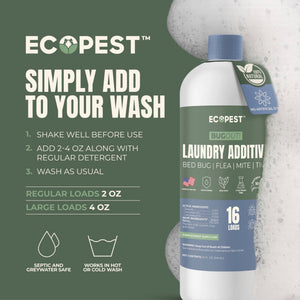
- Wash everything from the trip — worn or not — and dry on high heat for 30+ minutes. For delicates and cold-wash items, add BugOut! Laundry Additive to the cycle; its geraniol and cinnamon oil actives target bed bugs and eggs in both hot and cold water.
- Treat the luggage itself. This is the step almost everyone skips, and it's where a Bed Bug Vapor Pouch is purpose-built: seal your suitcase in a bag or bin with an activated pouch and let the essential-oil vapor fumigate it — lab testing showed 100% bed bug mortality after 48 hours, on adults and eggs. It works for anything you can't wash: shoes, bags, books, electronics.
Do those three things after every trip and your odds of a Tampa vacation turning into a Tampa infestation drop dramatically.
If You Already Have Bed Bugs: A Natural Treatment System for Tampa Homes
Because of pyrethroid resistance, natural treatments that work through mechanical and botanical pathways — heat, fumigation, contact-kill plant actives — are a genuinely rational choice here, not just a preference. The system:
- Confirm first. Place bed bug glue traps near bed legs and baseboards. Carpet beetles and other look-alikes get misdiagnosed as bed bugs constantly; confirm before you treat.
- Launder on a schedule. All bedding and worn clothing, hot wash + hot dry where fabrics allow, BugOut! in the cycle for everything else. Every 1–3 days during active treatment.
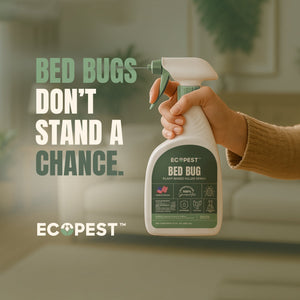
- Treat harborages directly. Apply EcoPest's natural Bed Bug Spray — a plant-based formula for bed bugs, eggs, and nymphs, safe for mattresses and fabric — to mattress seams, bed frame joints, baseboard gaps, and furniture crevices. Reapply consistently — eggs hatch on a delay, so one pass is never enough.
- Fumigate what you can't wash or spray with a Vapor Pouch — electronics, books, shoes, kids' stuffed animals.
- Monitor with interceptors under bed and furniture legs, and keep them there for weeks after activity stops.
For the full toolkit, see the bed bug control collection.
For Tampa Vacation Rental Hosts: Prevention Is a Business Expense
If you host on the Bay Area's short-term rental market, one bed bug review can sink a listing — and unlike a hotel, you don't have a pest contract and a housekeeping department behind you. A realistic between-guest protocol:
- Interceptors under every bed, permanently. They're invisible to guests and act as an early-warning system you check at each turnover.
- Hot-dry all linens — the dryer, not the wash temperature, is what kills reliably.
- A quick seam-and-headboard inspection at every turnover; two minutes with a flashlight.
- Treat proactively after any suspicious stay rather than waiting for confirmation from the next guest's review.
Catching an introduction at turnover costs you minutes. Catching it three guests later costs you revenue, ratings, and possibly a professional heat treatment.
When to Call a Tampa Professional
DIY treatment handles most early-stage residential cases. Call a professional when the infestation is established (daytime sightings, activity in multiple rooms), when you're in a multi-unit building and the source is likely a neighboring unit (this is where Statute 83.51 and your written notice matter), or when you're a host or landlord who needs documented professional treatment for liability reasons.
EcoPest Supply partners with vetted pest control providers across the country, including the Tampa Bay area. Request free local quotes through our Services page.
Frequently Asked Questions About Bed Bugs in Tampa
Why is Tampa on the 2026 bed bug list?
Tampa returned to Orkin's top-50 list at No. 46 for 2026, driven primarily by travel volume — the rankings are based on where Orkin performed the most bed bug treatments from May 2025 to May 2026. High visitor turnover through hotels, cruise terminals, and vacation rentals, plus rapid population growth, gives bed bugs more opportunities to spread.
Does Florida law make landlords pay for bed bug treatment?
In multi-unit housing, yes. Florida Statute 83.51 requires landlords of dwellings other than single-family homes and duplexes to make reasonable provisions for bedbug extermination, and that duty applies even if the lease is silent. For single-family homes and duplexes, the obligation can be modified in writing, so check your lease.
Can my landlord make me leave during treatment?
Florida law allows landlords to require tenants to temporarily vacate for extermination, with at least 7 days' written notice and for no more than 4 days. During that time the landlord must abate your rent for the days you can't occupy the unit.
Are bed bugs worse in Florida because of the heat?
Warm conditions speed up bed bug reproduction, and Florida's year-round warmth means no seasonal die-back. But the bigger Florida factor is travel: bed bugs spread by hitchhiking on luggage and furniture, and Tampa's visitor volume matters more than its temperature.
How do I avoid bringing bed bugs home from a Tampa hotel or Airbnb?
Inspect the mattress seams and headboard before unpacking, keep luggage off beds and carpet, and treat your belongings when you get home: hot-dry all clothing for 30+ minutes and fumigate the suitcase itself in a sealed bag with a vapor pouch. Most home infestations start with untreated luggage.
Do natural bed bug treatments work in Florida?
Yes, as a system. Heat, fumigation, and botanical contact-kill actives work through pathways unaffected by the pyrethroid resistance documented in U.S. bed bug populations — which is a real advantage over most hardware-store sprays. Consistency over several weeks matters more than any single product.
How long does it take to get rid of bed bugs?
A small early-stage infestation typically resolves in 4–6 weeks of consistent treatment. Established or building-wide infestations take 2–3 months or longer. The most common failure is stopping treatment as soon as visible activity drops, before delayed egg hatches complete.
The Outlook for Tampa Bay
Tampa's return to the rankings isn't a fluke — it's the predictable result of being one of America's fastest-growing, most-visited metros during a national bed bug resurgence. The drivers (travel volume, growth, turnover, pesticide resistance) aren't going anywhere, which means the smart posture for Bay Area residents is prevention as habit: inspect when you travel, treat your luggage when you return, and act fast and in writing if you rent.
Explore the full bed bug control collection, or request free quotes from vetted local pest control professionals serving Tampa and surrounding Florida communities.
About EcoPest
EcoPest offers natural, lab-tested, plant-based pest control solutions for homes across the United States. Our products use botanical actives like geraniol, clove oil, cinnamon oil, and pumice — providing effective control without the synthetic pyrethroids found in most conventional pest products. Learn more about our approach.